
Borealis has combined with Borouge and NOVA Chemicals to form Borouge International, a new global polyolefins leader.
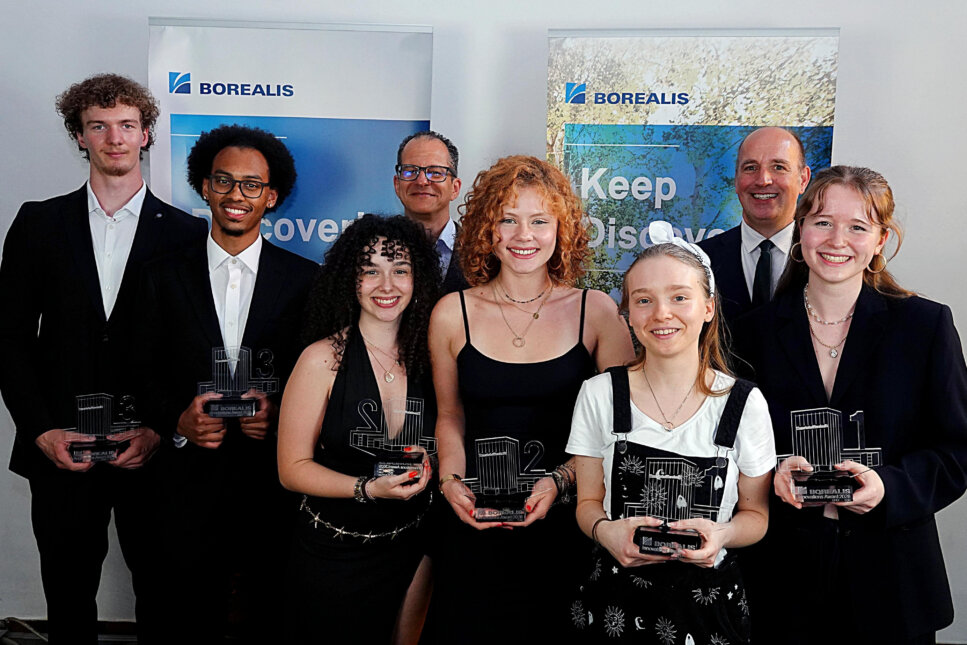
Photo: Winners of the Borealis Innovation Award 2026
© GFKT (Gesellschaft zur Förderung der Kunststofftechnik)
VIENNA, June 2, 2026. Research and innovation are key drivers of progress, competitiveness, and sustainable value creation in Europe’s chemical industry. They enable the development of solutions to global challenges while further expanding Europe’s innovation leadership in international competition. Therefore, innovative ideas and sustainable projects are more important than ever for European industry.
Three award-winning theses are proof that Austria certainly does not lack cutting-edge developments or talented young professionals.
Education, research, and innovative ideas are crucial factors for the further development of European industry. They form the foundation for sustainable growth and strengthen Europe’s position in the global competitive landscape.
Supporting young talent plays a key role in this. This is precisely where the Borealis Social Fund comes in, supporting initiatives that encourage young people to further develop and realize their ideas.
Three HTL (higher technical college) theses clearly demonstrate that the starting point for these necessary innovations can already be found in Austria’s schools. In their final projects, three groups of students addressed sustainable and forward-looking topics, for which they have now been honored with the Borealis Innovation Award.
Sponsored by Borealis, now Borouge International, the award has been recognizing HTL thesis groups since 2006 that stand out both for their personal achievements and their innovative projects.
As part of their senior thesis, Nikola Jelinek and Denise Lehner studied the biodegradation of plastics by natural organisms. The two students developed a method to detect fungi capable of biodegrading plastics. Through this work, they identified four naturally occurring fungal species that can use different types of plastics as a food source. The expert jury recognized this achievement by awarding them first place.
Energy-efficient processes not only offer an economic advantage but also contribute to reducing CO2 emissions. Anna Decker and Lina-Marie Salzmann, who took second place, therefore focused their thesis on the investigation of the drying process for plastics. In doing so, the two graduates were able to demonstrate that, with appropriate drying parameters, energy savings of over 80% can be realized when compared to standard processes.
Finally, Malik Grovogui and Dominik Henhapel were honored for the development of eco-friendly food packaging. In their thesis, they developed two biopolymers that are used, among other things, for reusable beverage cups. Thanks to the targeted modification of surface properties, these cups can be cleaned without leaving any residue during the washing process. For this, these two students were awarded third prize.
The awards were presented by Dr. Markus Horcher, Borealis Vice President of Sustainability & Public Affairs and President of the Gesellschaft zur Förderung der Kunststofftechnik (GFKT), who highlighted the exceptional achievements of these young talents. “It is impressive to see that the next generation of young engineers is developing such creative and groundbreaking solutions, thereby demonstrating their commitment to a competitive and more sustainable future.”
“For Borealis, these practical projects reflect the high quality of education at our local HTLs,” Markus Horcher emphasized before the approximately 200 invited guests, “and we are delighted to honor these young people for their successes and to highlight their achievements.”
Despite its relatively small size, Austria is a major industrial hub within Europe and ranks a solid 10th in the EU in the categories of economic output and patent applications.
But Austria is not only an important economic hub because of its innovative industry. In addition to the technical universities, the Higher Technical Colleges (HTLs) train over 5,000 young engineers annually. However, given the shortage of skilled workers, this represents only a small fraction of the engineers actually needed. In Austria alone, there is a shortage of approximately 10,000 HTL graduates1, and Germany faces a shortage of 134,000 skilled workers in the STEM fields (science, technology, engineering, and mathematics)2 .
“An education in the natural sciences or technical fields therefore offers excellent career and future prospects with varied work,” says Klemens Reitinger, department head at TGM, Vienna’s largest HTL, with confidence. “After all, these successes are already evident in the award-winning final projects and are certainly just the beginning of the future achievements of the young HTL graduates.”
Thesis: Identification of plastic-degrading fungi
Project team: Denise Lehner and Nikola Jelinek
Corporate partner: Universität für Bodenkultur Wien, Institut für Mikrobielle Genetik
Brief description:
Plastics are often found in places where they don’t belong. Instead of being properly disposed of and sent for recycling, plastics end up in the environment, causing long-term pollution. This is both a nuisance and a waste of resources.
Denise Lehner and Nikola Jelinek therefore investigated plastic fragments found in nature. In the process, they identified several fungal species (Rosea, Pseudodeflectus, and Tubingensus) as active degrading organisms and developed a system to observe these fungi as they visually break down plastic. Through their thesis, the two young researchers were thus able to demonstrate the existence of organisms that visibly “eat” through durable and barely biodegradable plastics.
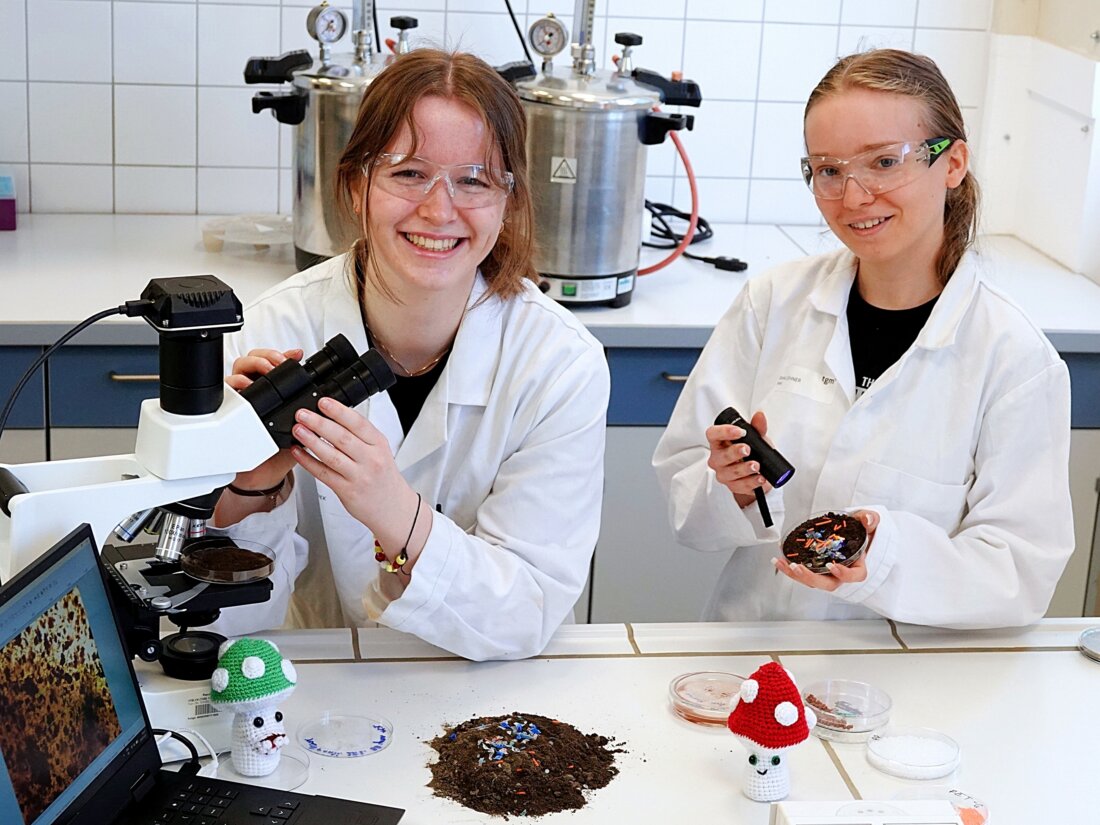
Photo: First-Place Recipients Denise Lehner and Nikola Jelinek
© GFKT (Gesellschaft zur Förderung der Kunststofftechnik)
Thesis: Energy Efficiency in Material Drying
Project team: Anna Decker and Lina-Marie Salzmann
Corporate partner: Geberit Produktions GmbH & Co KG
Brief description:
Some plastics absorb moisture from the environment. If the material is not sufficiently dried before processing, this can negatively impact product quality. In collaboration with Geberit, the latest drying technologies and currently used drying parameters were therefore evaluated.
As part of their thesis, Anna Decker and Lina-Marie Salzmann demonstrated that energy consumption and the required drying time vary significantly depending on the dryer. Their results show that vacuum dryers deliver the best results both in terms of energy efficiency and the achievable material properties. This allowed energy consumption to be reduced by approximately 80% and the required drying time to also be significantly reduced.
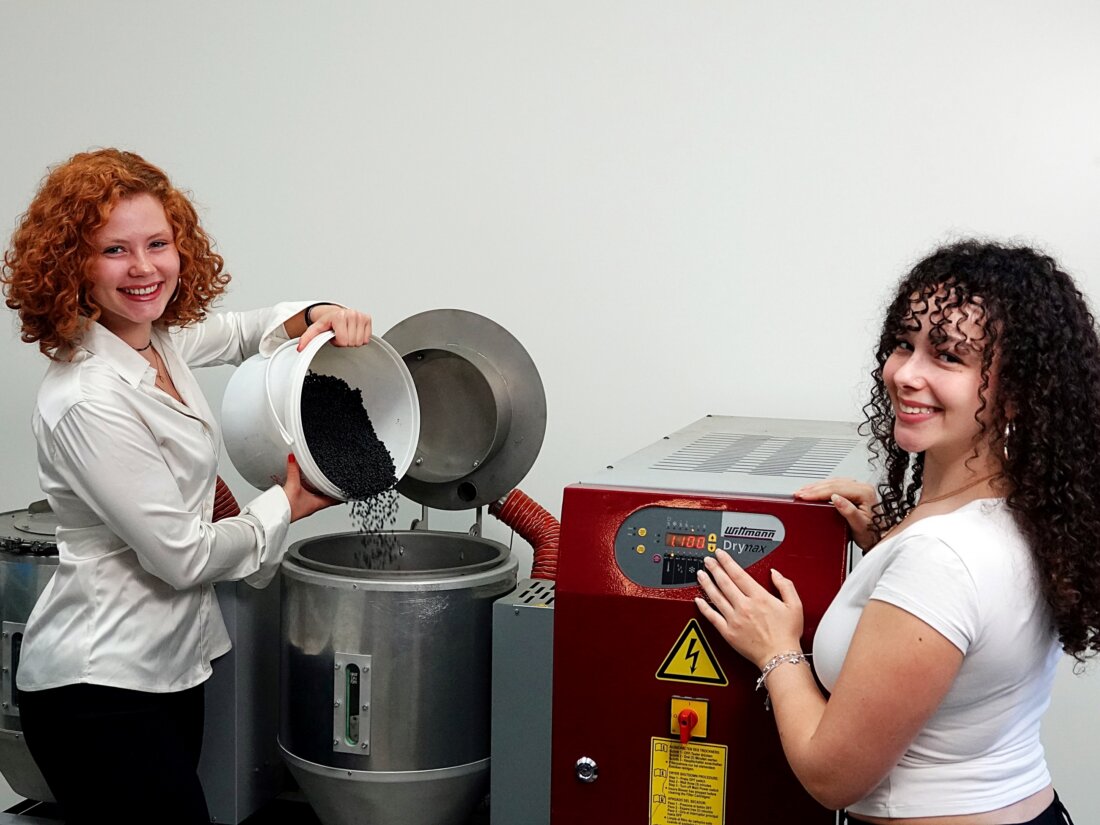
Photo: Second-Place Recipients Anna Decker and Lina-Marie Salzmann
© GFKT (Gesellschaft zur Förderung der Kunststofftechnik)
Thesis: Surface Modification of Eco-Friendly Food Packaging
Project team: Malik Grovogui and Dominik Henhapel
Corporate partner: E.L.T. Kunststofftechnik & Werkzeugbau GmbH & Co KG
Brief description:
Many food products are packaged for hygienic reasons or to extend their shelf life. However, single-use packaging made from coated paper is often not an ideal ecological solution due to the high water consumption involved in its production and its limited recyclability.
Malik Grovogui and Dominik Henhapel therefore developed, with support from E.L.T. Kunststofftechnik & Werkzeugbau, two plastics made from renewable resources. The surface properties of these two biopolymers were modified so that the packaging produced from them can be cleaned more easily. Instead of disposable cups, this allows for the production of reusable cups that are both food-safe and bio-based. This conserves resources while simultaneously reducing packaging waste.
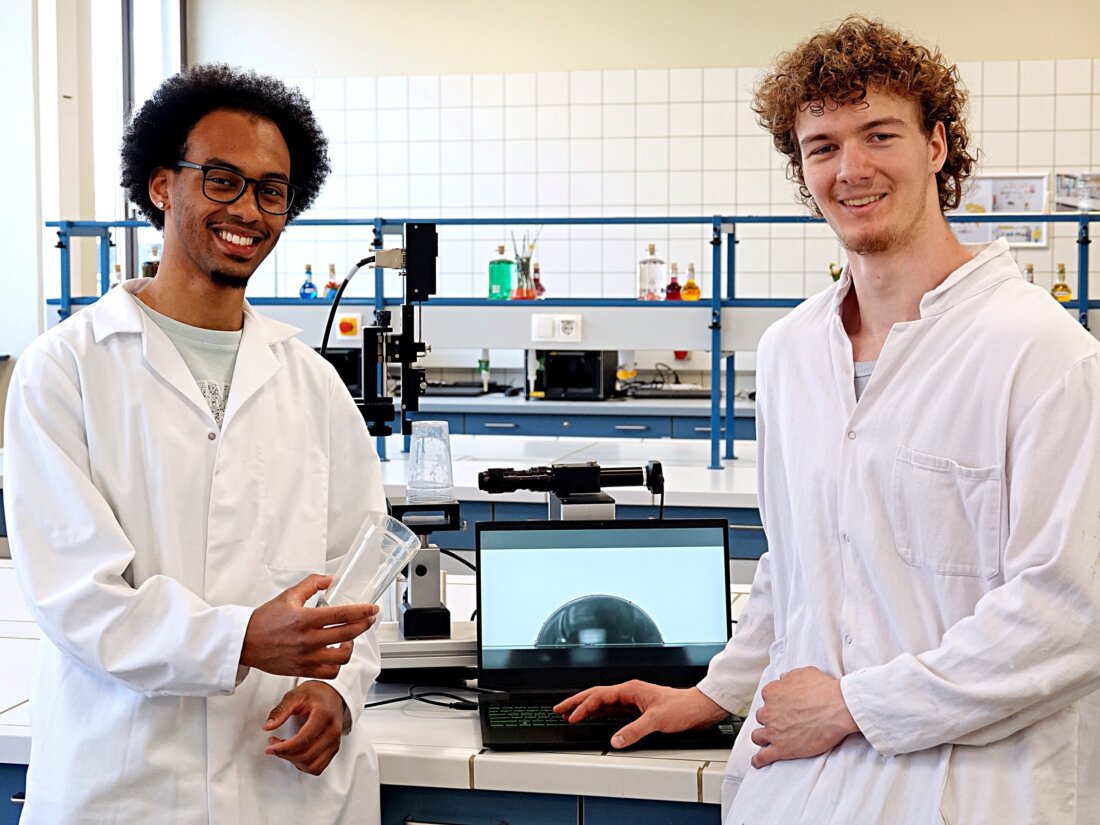
Photo: Third-Place Recipients Malik Grovogui and Dominik Henhapel
© GFKT (Gesellschaft zur Förderung der Kunststofftechnik)
END
This was published as a media release by TGM on June 2, 2026 and this news is also available in German language.
Enquiries:
Christopher Fischer
TGM – The School of Technology
Wexstraße 19-23, 1200 Vienna, Austria
Tel: +43 (01) 33126-557
E-Mail: cfischer@tgm.ac.at
[1] Industriewissenschaftliches Institut: HTL-Qualifikationen für die österreichische Industrie, Wien, 2025
[2] Cologne Institute for Economic Research: STEM Spring Report 2026, Cologne, 2026
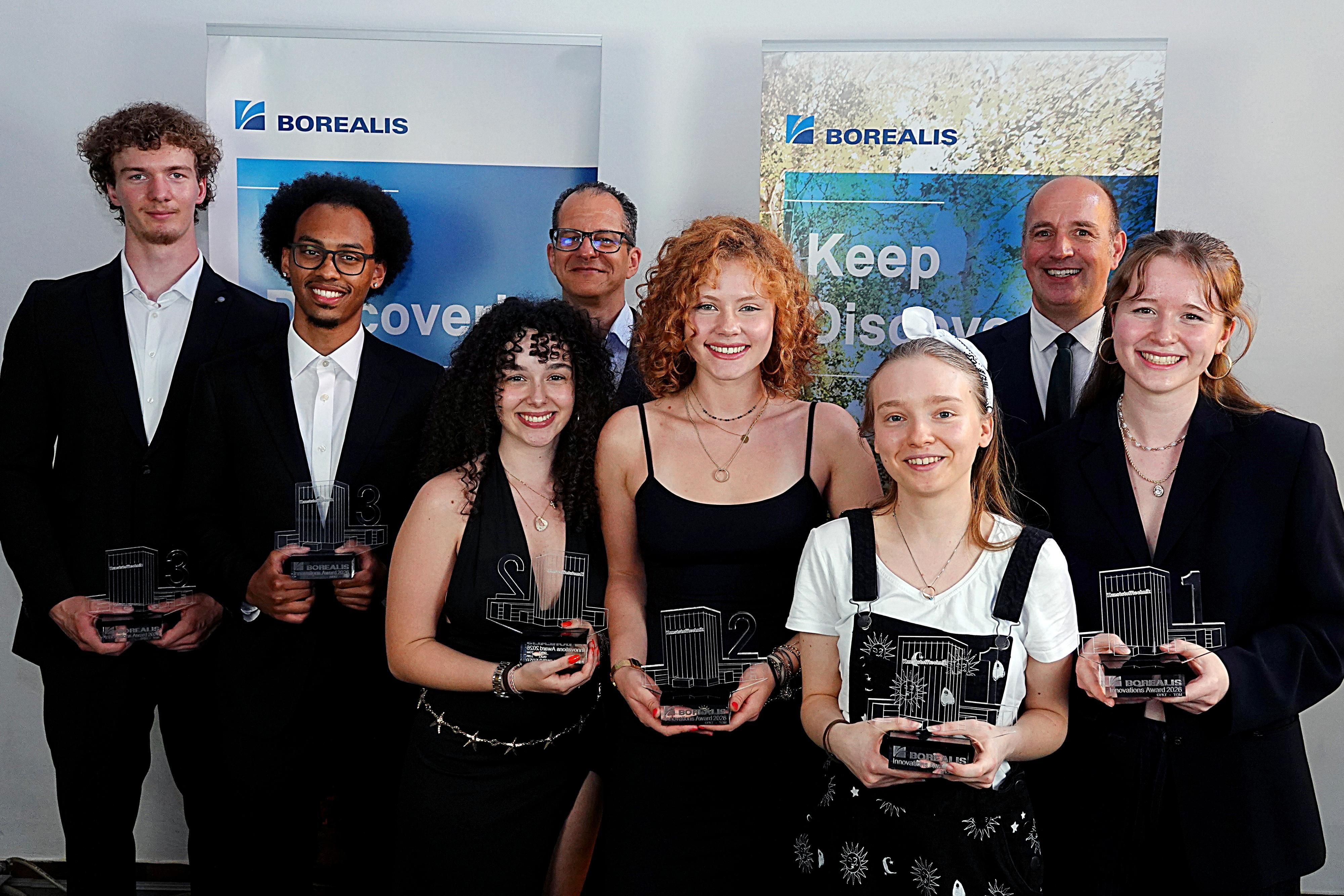
Photo: Winners of the Borealis Innovation Award 2026
© GFKT (Gesellschaft zur Förderung der Kunststofftechnik). image. 1.74mb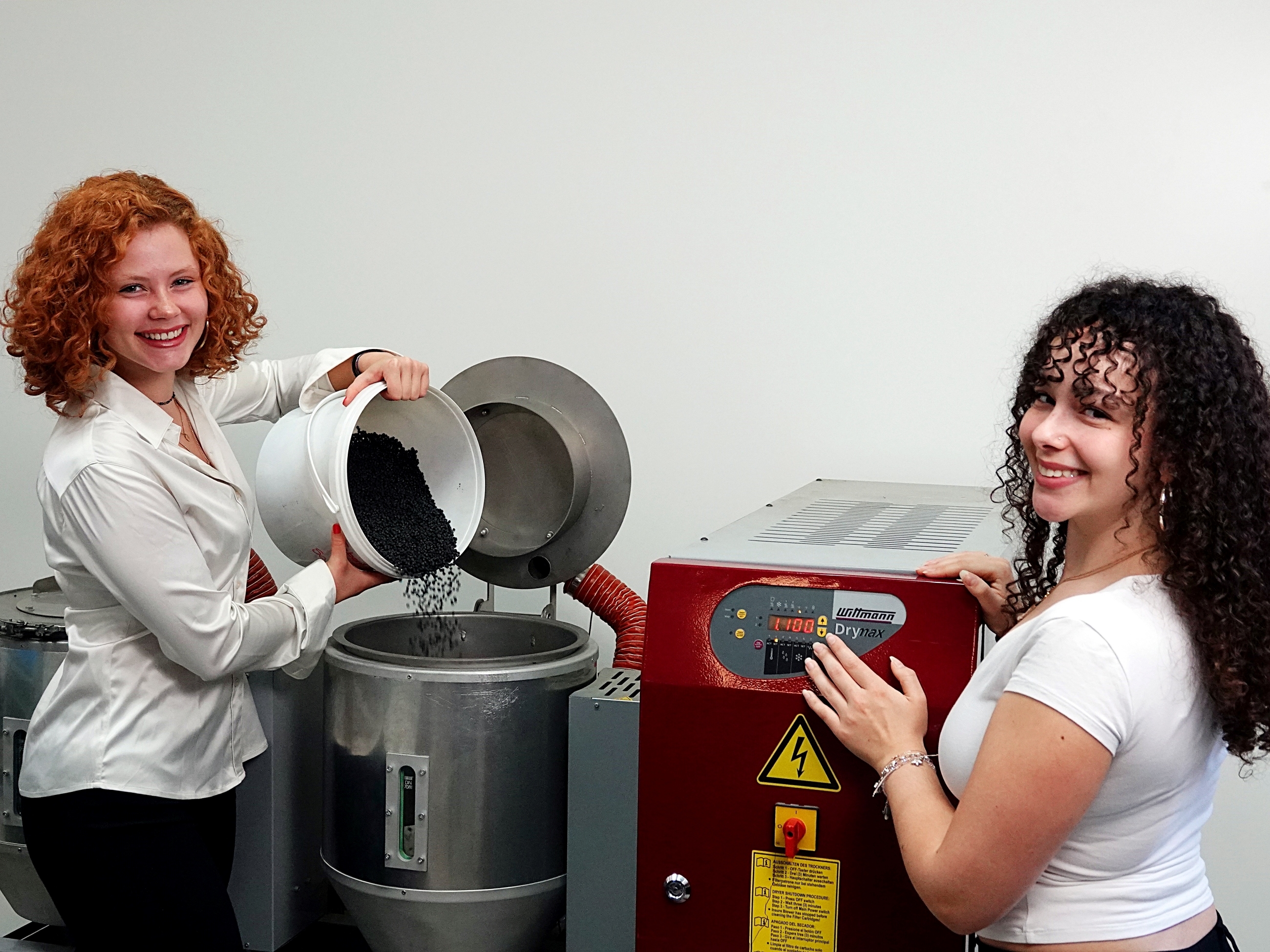
Photo: Second-Place Recipients Anna Decker and Lina-Marie Salzmann
© GFKT (Gesellschaft zur Förderung der Kunststofftechnik). image. 2.57mb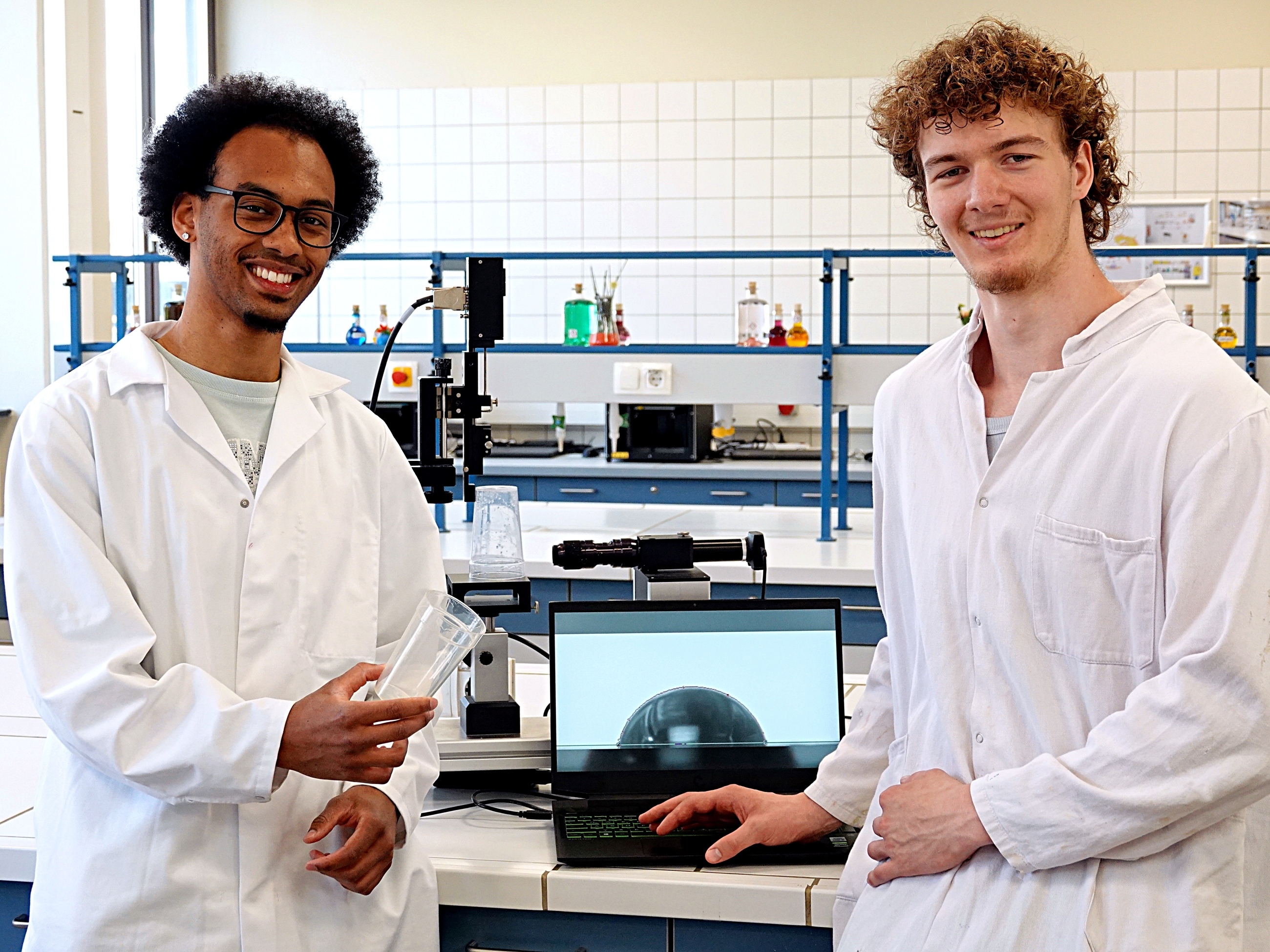
Photo: Third-Place Recipients Malik Grovogui and Dominik Henhapel
© GFKT (Gesellschaft zur Förderung der Kunststofftechnik). image. 2.33mbAbout TGM
TGM – The School of Technology is Vienna’s largest Higher Technical College, with approximately 2,800 students and around 400 teachers. Its program offerings include biomedical and health engineering, electronics and technical computer engineering, electrical engineering, information technology, plastics and environmental engineering, mechanical engineering, and industrial engineering.
About Borouge International
Borouge Group International AG (Borouge International) is a global leader in polyolefins formed in 2026 through the combination of Borouge Plc, Borealis and NOVA Chemicals. Backed by long-term shareholders XRG, the international investment arm of ADNOC, and OMV, Borouge International brings together world-class assets, advantaged feedstock access and proprietary technology to deliver reliable high-performance polyolefin solutions across consumer products, infrastructure, energy, mobility and advanced products.
Borouge International combines a differentiated asset base, global reach and deep technical expertise to serve customers across key growth markets. The company is headquartered in Austria, with a regional headquarters in Abu Dhabi and corporate hubs in North America and Asia Pacific. Learn more about the company at https://www.borougeinternational.com/.
About GFKT
The Austrian Society for Plastics Engineering (GFKT) supports the training of young plastics engineers at the Higher Technical Federal Teaching and Research Institute (HTBLVA) Vienna XX, which is better known as TGM – The School of Technology. The machines and systems required for this are made available in cooperation with the industry.
www.lkt-tgm.at/gfkt