
Borealis has combined with Borouge and NOVA Chemicals to form Borouge International, a new global polyolefins leader.
Valio was founded in 1905 and today is Finland’s largest food exporter. Owned by 3,200 Finnish dairy farmers through cooperatives, the company has built a strong reputation for high-quality dairy and plant-based products. Sustainability is at the core of Valio’s operations, shaping its approach to animal welfare, dairy production, biodiversity, and, of course, product packaging.
By 2030, Valio aims for 80% of its packaging to be made from renewable or recycled materials—far exceeding the mandatory recycled content for food packaging under the EU’s Packaging and Packaging Waste Regulation (PPWR).
An important step came with the packaging for Valio Kreikkalainen Jogurtti, a popular yogurt product. In this project, Valio worked with partners across the value chain, including us at Borealis, to introduce packaging made with 30% chemically recycled polypropylene from the Borcycle™ C portfolio, with the recycled content attributed using the mass balance method.
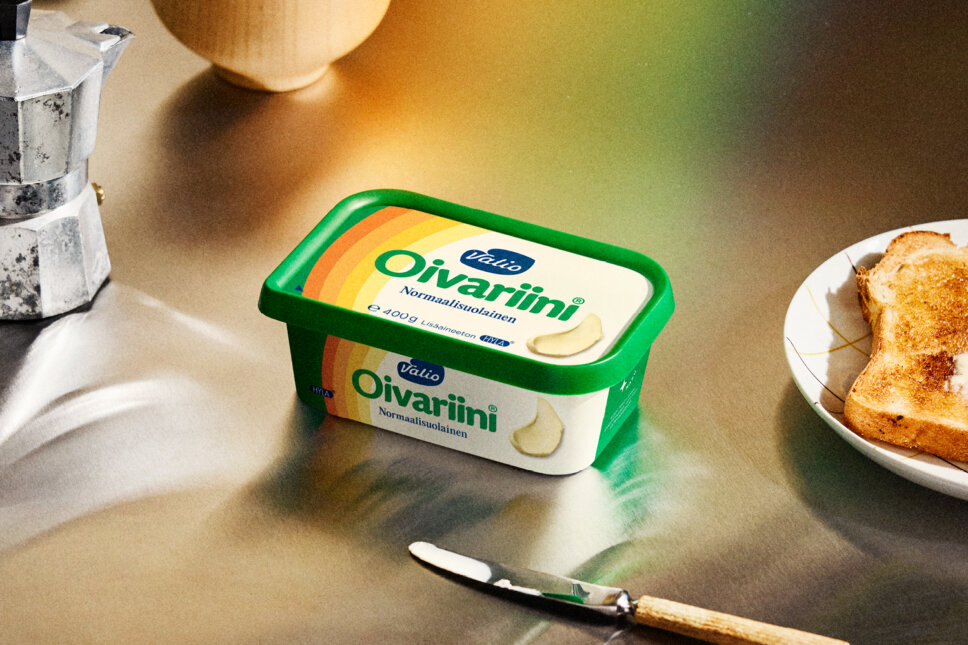
Valio's Oivariini packaging is made using a Borcycle C polymer introducing 30% recycled content, attributed using the mass balance method.
© Valio
Building on the success of that project, Valio set out to extend the approach to a new product: Oivariini, a well-known butter-blend spread. By incorporating recycled content at this stage, Valio is preparing in advance for upcoming PPWR requirements, putting it in a strong position to address potential challenges early.
The packaging for Oivariini consists of a thin-wall injection-molded pot and lid—a format that places high demands on material performance and process stability.
Based on its positive experience with our materials, Valio selected a chemically recycled grade from our Borcycle C portfolio for this application. The grade was used as a drop-in solution to replace 30% of the virgin polypropylene in the Oivariini packaging.
The solution met all food contact and product safety requirements. It performed reliably in injection molding and on packaging filling lines and delivered the same visual appearance as packaging made from virgin polyolefins.
As with all Borcycle C materials, the grade is ISCC-PLUS certified, ensuring traceability of the chemically recycled feedstock through a certified chain of custody up to the finished polymer.
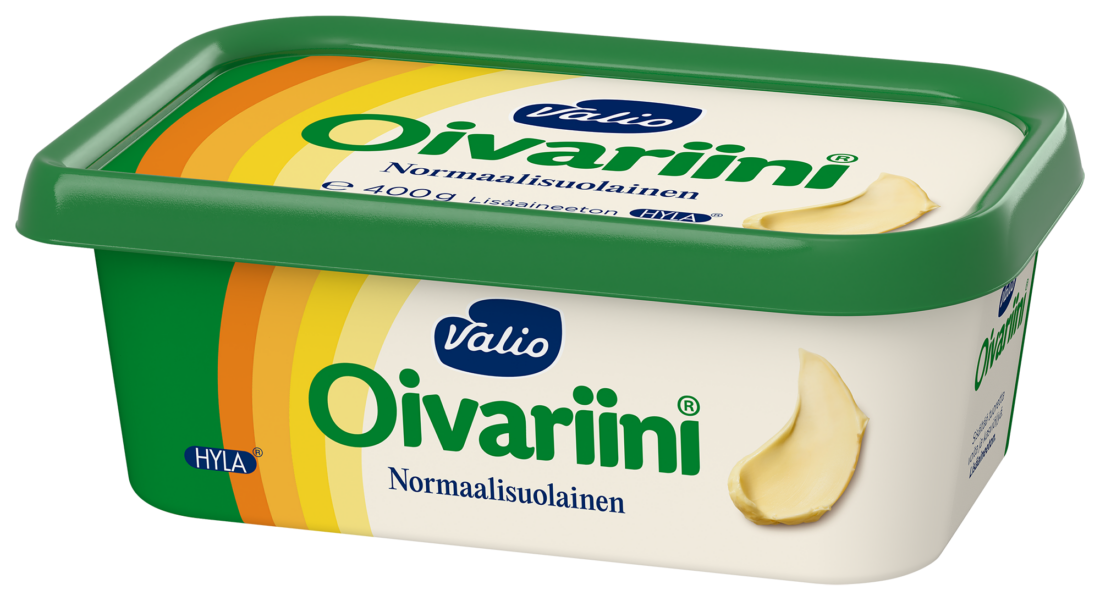
Following its introduction in Valio Kreikkalainen Jogurtti packaging in 2025, Borcycle C chemically recycled material is also now used in Oivariini packaging.
© Valio
What distinguishes Valio’s approach is how it is communicated to consumers. Chemical recycling and mass balance can be complex topics, particularly in the context of everyday food packaging. To address this, Valio introduced clear labeling, with a circle showing the percentage of chemically recycled content and a QR code linking to an online explanation of the process, the mass balance approach, and its role in supporting circularity.
By making this information accessible, Valio helps ensure clarity and credibility around chemically recycled packaging, supporting consumer trust and the wider transition to a circular economy.
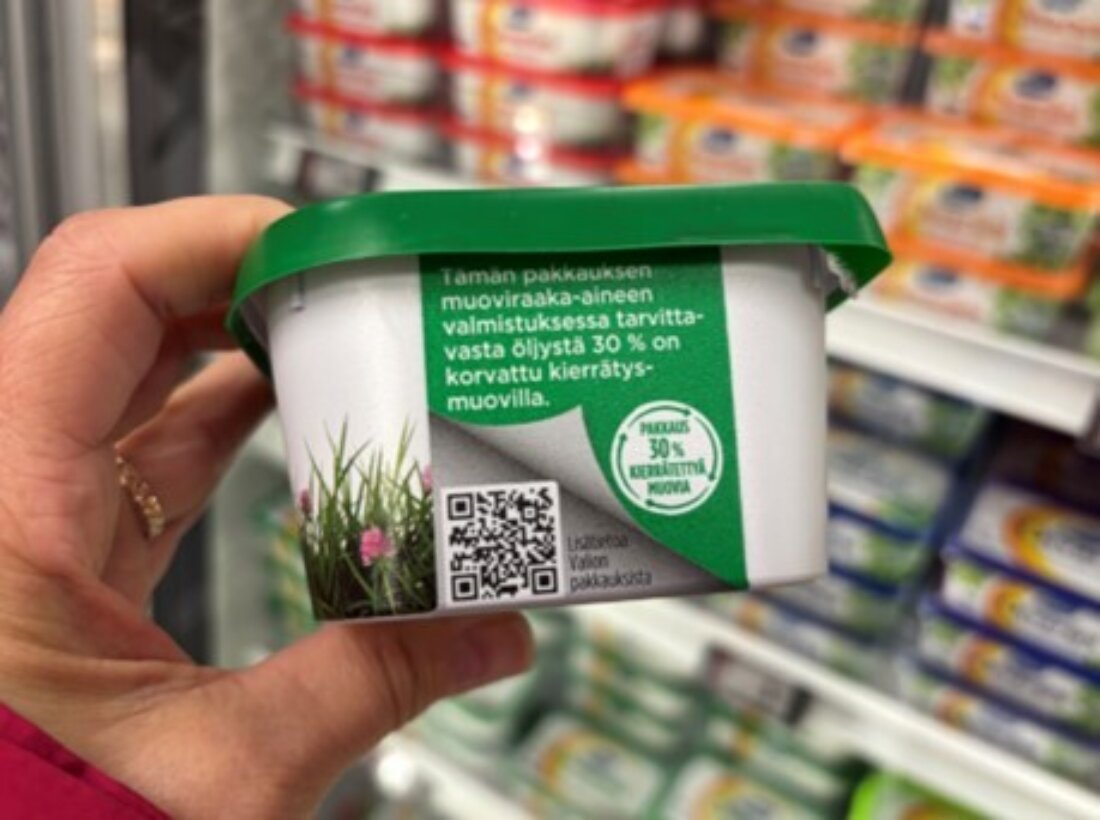
Valio strengthens consumer communication by adding a QR code to its Oivariini packaging, offering a clear and accessible explanation of how chemically recycled material is used and attributed through the mass balance method—making circularity visible dire
© Valio
“Introducing chemically recycled materials into our packaging is only part of the task. It’s equally important to explain what this means in practice—how the material is produced, how recycled content is accounted for, and why we’ve chosen this approach. Clear information helps consumers understand the changes they see on the pack.
Juhana Pilkama, Valio Head of Packaging Development.
Packaging is where circularity becomes visible to consumers. We’re pleased to have worked with Valio on this project, which demonstrates that the use of chemically recycled materials in food packaging can be explained clearly through simple on-pack information and digital content.
Peter Voortmans, Borealis Vice President Marketing Consumer Products.