Circular Economy
Our world has a limited amount of resources. Taking without considering the planet's boundaries is no longer an option. For Borealis, this means critical reflection in two ways: What kind of materials do we want to use in our products and what can we do when inconsiderate taking of goods made from our products has a damaging effect on the environment, for example in the form of plastic pollution.
These two considerations come together in one elementary concept: The Circular Economy. A concept in which the linear economic principle of Take-Make-Waste no longer has a place, but is replaced with a system that produces as little waste as possible, keeps products and materials in use as long as possible and allows natural systems to regenerate as much as possible. We are committed to leading the transformation towards a truly circular economy across our operations and our products.

Our Ambition
Borealis’ ambition is to enable its customers in their transition to become circular.
Borealis was a forerunner in the industry and first acquired mechanical recycling units in 2016 and 2018, in an effort to decouple the manufacturing of our products from taking new resources and developing innovative methods to turn plastic waste back into a resource that can be kept in the system longer.
In 2023, we aquired a recyclate compounding facility and in 2024 an additional mechanical recycling unit. While we are also active in chemical recycling, we remain committed to prioritizing mechanical recycling wherever possible. Increasing the circular economy has a strong link to climate change, as keeping resources in the circle longer also reduces greenhouse gas emissions. Bio-based plastic, which can be recycled in conventional plastic waste streams, provides an alternative option to move away from fossil input material. Our bio-based products are made from sustainably sourced renewable feedstock. Since 2023, all of Borealis' European polyolefin and polyolefin compounding sites, as well as our recycling sites Renasci in Belgium and Ecoplast in Austria are ISCC PLUS certified, covering circular polyolefin products manufactured with renewable feedstocks and chemically recycled feedstock.
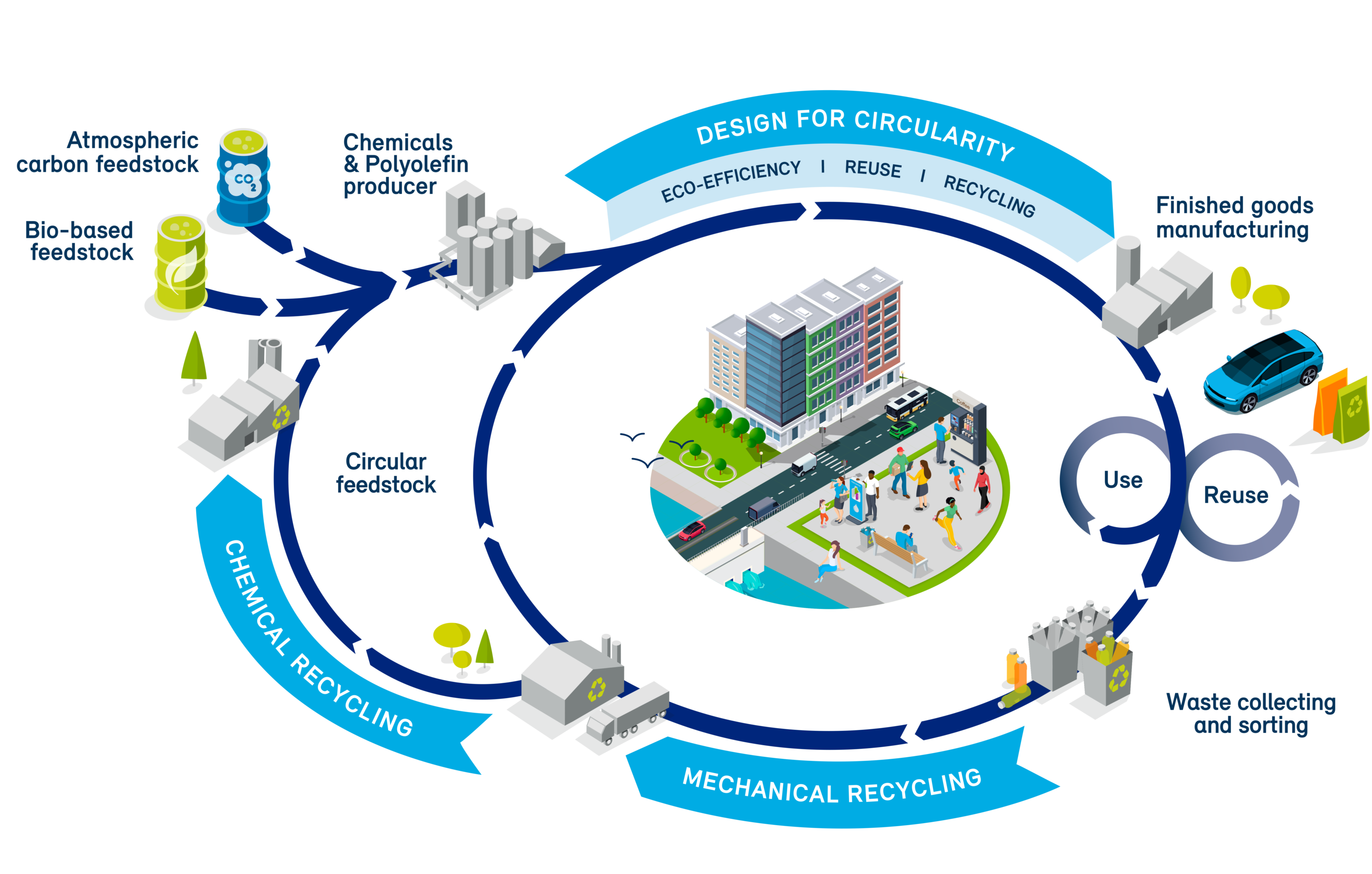
A functioning circular economy is based on a system, where the different parts of the system are working together perfectly. Borealis is committed to innovate in all these systems:
- We follow an integrated Circular Economy Model, employing a variety of circular solutions that ensure that products are circulating at their highest value, quality and utility over many lifetime
- We own three mechanical recycling sites, one mechanically recycled plastic compounding site and hold a majority share in a chemical recycling company, able to process mixed waste streams that would otherwise go to incineration
- We have a portfolio of circular base chemicals and bio-based materials, made from sustainably sourced renewable feedstock derived solely from waste and residue vegetable oils
- We are active in value chain partnerships to increase product circularity
- We are part of the negotiations for a Global UN Treaty to Stop Plastic Pollution
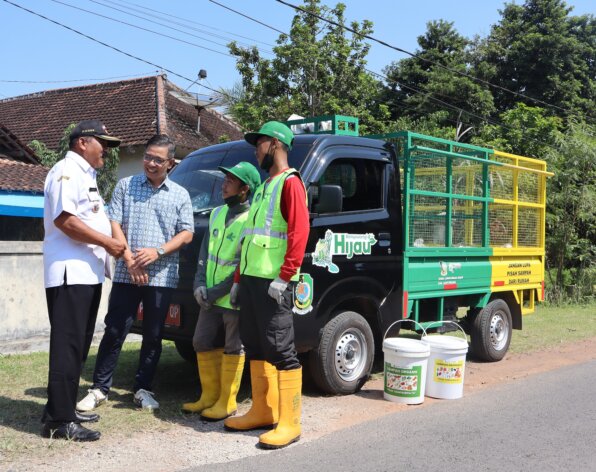
- We initiated Project STOP and founded the programme together with SYSTEMIQ, to create effective circular waste management systems in a high-pollution area in South-East Asia
- We published Ten Codes of Conduct for Design for Recyclability
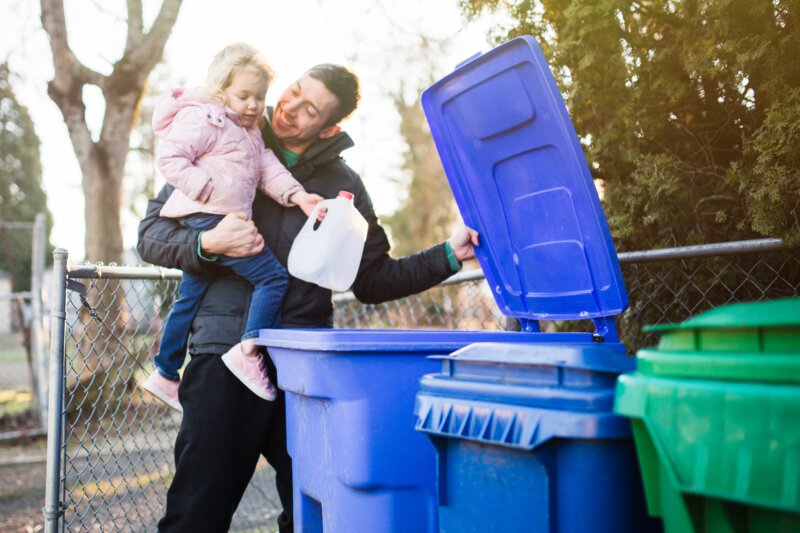
Cooperation with the Ellen MacArthur Foundation (EMF)
In 2016, Borealis became the first major polyolefin producer to have signed the EMF Global Commitment and became a core partner of the initiative in 2019. The initiative is uniting key stakeholders – including citizens, NGOs, academia, governments, philanthropists, municipalities, and companies – behind one common vision: to eliminate unnecessary and problematic plastics; to innovate in order to create the plastics that society does need, and ensuring that these are reusable, recyclable or compostable; and to circulate plastics, thereby keeping them in the economy, and out of natural environments.
Learn more about the EMFOur Achievements in 2024
Increasing the production volumes of circular solutions, thus limiting resource use and lowering carbon emissions, is a necessity to ensure a more sustainable future. We made big commitments and have taken the first steps to reach them. Discover the details of our journey towards becoming a circular company in our Annual Report.
Our Actions for the Circular Economy